Tuesday, November 23, 2010

Toy Tuesday: Taxpayer subsidized toy testing?

A little background

Shortly after started my first job with a big toy company at a big toy company (over 20 years ago), we received requests for samples from The Canadian Toy Testing Council. The Council had already been around for many years, and had a history of issuing toy reviews that were often highly critical of mass market and TV promoted toys. My boss was unequivocal in rejecting their request, and told me that they were just a bunch of Ottawa-based moms who lacked the qualifications to effectively evaluate and report on toys.

A year later at the same toy company, the Council called one of our dolls the worst toy of year. I remember the president of the company jumping for joy and accurately predicting that the doll would become the year’s hottest item in Canada. The doll had truly innovative features, a compelling play pattern, and aggressive TV advertising. On top of that, it was featured as the lead toy story on every news program in the country, and typified the expression “all publicity is good publicity”.

As a couple more years passed and management changed at the toy company. It was decided that we should cooperate with the Canadian Toy Testing Council rather than view them as the enemy. We spent a lot of time escorting them through Toy Fairs in Toronto and New York, but there really wasn’t any impact on the reviews our toys received.

It’s different today

20 years ago, there were few sources of product reviews available to consumers beyond the Toy Report issued by the Council. There was no internet, so there was no amazon.com, no toysrus.com, and no mommy bloggers. Today, obviously, things are much different, yet The Canadian Toy Testing Council persists.

And now...supported by our taxes

The Ottawa Citizen reports that the Council has received a grant this year from the Ontario Trillium Foundation, a taxpayer-funded organization whose mission is to build “healthy and vibrant communities throughout Ontario by strengthening the capacity of the voluntary sector, through investments in community-based initiatives.”

The Council issued its annual Toy Report last week, with a list of “Best Bets” that includes a variety of mass market and specialty toys. While I respect the motivation of The Canadian Toy Testing Council, I do question whether it’s necessary or meaningful, and firmly believe that our tax dollars are better spent elsewhere.

Tuesday, November 9, 2010

Toy Tuesday: Is Nukotoys the next wave in gaming?


Players in the colliding worlds of kids’ products and entertainment seem to be constantly finding new ways to enhance kids’ interaction with brands, leading to the emergence of completely new play patterns. An interesting example is that of Nukotoys, a startup company that’s trying to apply “Silicon Valley models” to its business with rapid prototyping, interactive technology, nimbleness, financial efficiency, and scalability.

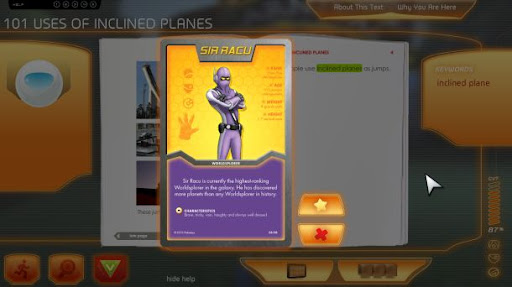
The company is planning to make game cards with embedded chips, containing skills or tools that help players with their game. It’s an excellent integration of the play patterns that we see in both computer games and in trading card games. The social media like integration adds another dimension to the play pattern.


In games from Nukotoys, special trading cards will give kids additional powers or skills that they will be able to utilize in-world, as well as trade those cards with real-world friends, who will automatically become part of their in-world social networks.


Richard Garfield, who developed Magic: The Gathering for Wizards of the Coast, is credited with being the creator of the hugely successful genre of trading cards. He is designing the overarching card system for Nukotoys.

During the time I spent at Wizards of the Coast, we often speculated about what would be the next “wave” in gaming, with role playing games (Dungeons & Dragons), miniatures (Warhammer), and trading card games (Magic: The Gathering, Pokémon) being the first waves. With an intriguing concept and extensive cross platform integration, perhaps Nukotoys’ game system will be the next wave.

Read more about Nukotoys here.

Monday, October 25, 2010

Tasty Furniture? Lemon Scented Breakfast?


I'm all for developing line looks for packaging that are "on brand", but sometimes striving for consistency to achieve the same look in branded packaging isn't a good idea. I think Walmart ought to give a little more thought to how they approach packaging for their Great Value brand before someone makes their morning pancakes with furniture polish.

Monday, October 18, 2010

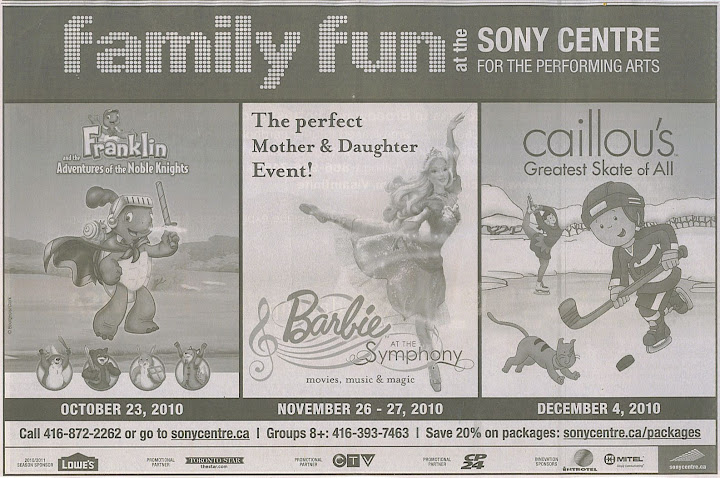
Franklin, Barbie, and Calliou - LIVE!


Live entertainment for kids' brands is often a key component of a solid marketing strategy. For leading brands, live shows in theaters and malls are a great source of revenue. For other brands, live shows can heighten awareness and appeal among kids and their parents.

By coincidence, I have worked closely on all the brands featured in ad in this weekend's Toronto Star for Toronto's Sony Centre for the Performing Arts. I started my career in the toy industry working on Barbie branded products. Franklin the Turtle was every kids' best friend when I worked at Nelvana for four years, and it was like he became my friend too. It appears that the Franklin live show is similar (identical?) to the "Franklin and the Green Knight" program that I worked on at Nelvana. Finally, I got to know Caillou as master toy licensee when I was Marketing Director at Irwin Toy.

It's nice to see how these classic brands continue to entertain kids and gratifying to know that I played a part.

Tuesday, October 12, 2010

Sesame Street's Grover as "The Old Spice Guy"

As someone who works in marketing and entertainment, I've also thought that one of the greatest honors is to be parodied on Sesame Street. An even bigger achievement is to have Sesame Street parodying a parody, which is exactly what they've done with Grover's take on the Old Spice Guy:


Tuesday, October 5, 2010

Toy Tuesday: Fill in the Spot with Lego

This cute video from Lego uses clever visual devices to show how you can build anything from Lego.

Monday, October 4, 2010

Just the Right Senses of Humor and Propriety

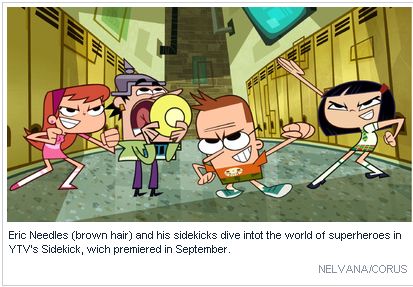
The Toronto Star’s current series on Canadian culture offers a fascinating overview of kids’ TV shows that are produced in Canada.

They quote many industry experts, including Cookie Jar’s Michael Hirsh, the BBC’s Adrian Mills, and Caroline Fortier from The Alliance for Children and Television.

The Star correctly points out that Canadian kids’ programming has wide appeal around the world because it seems to have just the right sense of humor and just the right sense of propriety:

  • We have a good sense of what is acceptable and what is not acceptable.
  • Canadians have different values. We are a cross between the European and the American.
  • Canadian kids’ shows score low on violence and very high on informal education, happy characters and scenes depicting social relationships, ecological behaviour and cultural activities.
  • We have shared social and cultural values --a passion and deep-rooted respect for the audience.
  • Canadian producers can bring an ‘American’ sensibility to a program — particularly in animation or live-action drama for older kids — but in a toned-down, safer kind of way which some consider more palatable than the undiluted product.
Children’s television in general, and animation in particular, is a real Canadian forte, and I feel privileged to work with several Canadian companies who bring great entertainment to kids around the world.

Check out the full article in The Star here.